
SKĐS - As Vietnam accelerates its goal of ending the AIDS epidemic by 2030, the role of epidemiologists becomes more crucial than ever. For nearly four decades, Assoc. Prof. PhD. Le Minh Giang has tirelessly dedicated himself to the "front lines" of HIV/AIDS prevention and control, substance abuse, and responding to emerging epidemics.
The Biggest Challenge is Controlling the HIV Epidemic among Men Who Have Sex with Men
Reporter (R): Assoc. Prof. PhD. Le Minh Giang, from an epidemiologist's perspective, could you analyse the biggest epidemiological challenge Vietnam is facing in its roadmap towards the goal of ending the AIDS epidemic by 2030? What motivated you to persevere in research for over 30 years in this sensitive and difficult field?
Assoc. Prof. PhD. Le Minh Giang: First, I would like to sincerely thank Sức khỏe và Đời sống newspaper and its readers for their interest in my personal insights. Over the past two decades, Vietnam has effectively controlled the HIV/AIDS epidemic, even amidst the challenges of the COVID-19 pandemic. The estimated HIV incidence rate has significantly decreased, and similarly, the mortality rate has also shown a downward trend. Vietnam has successfully controlled the HIV epidemic among female sex workers and, notably, among injecting drug users.
However, epidemiological surveillance results and research indicate that the epidemic has been on the rise among men who have sex with men (MSM) over the past 10 years. One of our estimates showed that during the 2017-2019 period, the incidence rate among MSM in Hanoi was comparable to the peak of the HIV epidemic in this group in Bangkok, Thailand, during 2006-2012.
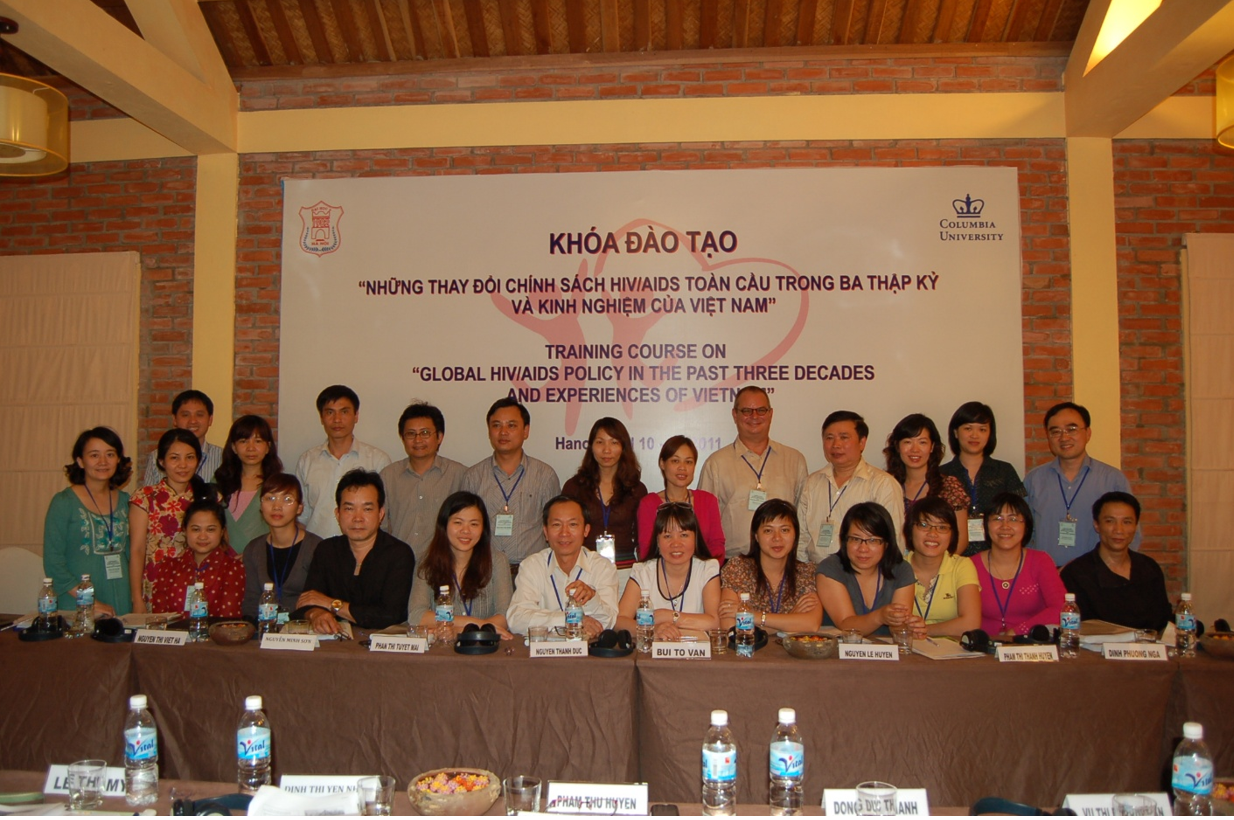
Assoc. Prof. PhD. Le Minh Giang (standing on the right) during a training course on "Global HIV/AIDS Policy Changes over Three Decades and Vietnam's Experience".
Therefore, the biggest epidemiological challenge to achieving the goal of ending the AIDS epidemic by 2030 is to effectively control the HIV epidemic among MSM and maintain epidemic control in other groups. With recent scientific breakthroughs in long-acting injectable HIV prevention and treatment drugs (such as cabotegravir, lenacapavir), we have every reason to be optimistic about achieving this goal.
Many factors have helped me persevere on my chosen path. When I began my postgraduate studies at Columbia University, USA, in the late 1990s, many studies by my professors and fellow students on the HIV/AIDS epidemic in the United States sparked my curiosity and desire to research the situation in Vietnam. To this day, some of my professors and classmates continue to research HIV/AIDS, and they continue to inspire me.
Secondly, over the past nearly 30 years, I have met many leaders, colleagues both domestically and internationally, many of whom are social activists, program managers, and individuals whose lives have been affected by HIV/AIDS. They have provided me with great encouragement to continue researching and serving the community. And very importantly, my family and loved ones have always shared both difficulties and successes.
Two Breakthrough Intervention Models: Expanding Methadone Treatment and Providing Evidence to Promote PrEP
R: Having been involved in research for many years, you have conducted numerous key studies on high-risk groups. Could you elaborate on an idea or intervention model that you consider most groundbreaking, successfully implemented by your team, and what practical changes it brought to the community?
Assoc. Prof. PhD. Le Minh Giang: I would like to share two activities whose contributions have been recognized by the Ministry of Health. Firstly, since 2012, the Center for Training and Research on Substance Abuse - HIV at Hanoi Medical University has been tasked with training thousands of healthcare workers, serving the rapid nationwide expansion of the methadone maintenance treatment program for opioid addiction.
Secondly, the cohort study of men who have sex with men (MSM) in Hanoi during 2017-2019 provided evidence of the explosive HIV infection among this group, which helped the Ministry of Health decide to expand pre-exposure prophylaxis (PrEP) in Vietnam. This result was recognized with a Certificate of Merit from the Minister of Health in 2019.
Notably, from May 2019 to the present, we have developed the Sống Hạnh Phúc (SHP) Clinic at Hanoi Medical University Hospital into the city's largest PrEP provider, with over 6,000 MSM accessing this effective prevention method.
Overcoming Stigma Barriers and an Inspiring Story
R: When conducting research with vulnerable and hard-to-reach target groups, what were the biggest difficulties and hardships you and your colleagues faced? In that journey, were there any unforgettable moments or memories that strengthened your belief and helped you continue your scientific mission?
Assoc. Prof. PhD. Le Minh Giang: There were many difficulties and challenges, but also great joy and motivation. I remember during the COVID-19 pandemic, clients of the SHP clinic faced many difficulties in receiving their regular medication. We had to implement various pilot measures such as delivering medication to patients, providing phone consultations, and remotely collecting and transporting blood samples to ensure that clients did not experience treatment interruptions. One of our studies showed that only one-third of clients experienced medication interruptions, and only a very small percentage switched to other facilities. This was a great joy for healthcare workers like us.
Another challenge was the fear of stigma and being identified by community members, even when they came to the SHP clinic. Many clients still wore masks when entering the clinic. These barriers to accessing effective, readily available prevention measures for high-risk communities are what motivate me to continue on my chosen path.
Speaking of inspiring stories, I want to talk about two community members who were once my staff: Mai Quang Anh – Director of the WeCare Social Enterprise, and Vu Thang – Director of Motive Social Agency. Both are young, enthusiastic individuals. After working with us, driven by their concerns and desire to contribute more to the community, they decided to establish their own organizations.
Currently, both WeCare and Motive Social Agency provide stable employment for community members, implement activities connecting the community with healthcare services, communicate about mental health disorders and substance abuse prevention, and promote community engagement. The success, however small, and the immense dedication of people like them are what help me strive even harder in my work of teaching, researching, and serving the community.
Integrating Substance Abuse Interventions into HIV Prevention and Treatment Programs is Necessary
R: What valuable lessons have the experience of responding to the COVID-19 pandemic and in-depth research on substance abuse brought to HIV/AIDS prevention and management? In your opinion, how should the dangerous link between substance abuse and HIV be comprehensively addressed to achieve optimal effectiveness?
Assoc. PhD. Le Minh Giang: In Vietnam, as in many parts of the world, substance abuse is closely linked to the risk of HIV infection and affects the treatment process.
Currently, synthetic drugs, especially methamphetamine (crystal meth), are becoming increasingly common. Our studies among methadone-treated patients show that the proportion of concurrent methamphetamine use requiring intervention is about 20%. Thus, from an epidemiological perspective, it can be affirmed that HIV/AIDS prevention and control interventions cannot be separated from substance abuse interventions.
From a programmatic perspective, integrating interventions to reduce and eventually cease substance abuse into HIV/AIDS prevention and treatment facilities is a low-cost but highly effective measure. We have just completed a collaborative study with the University of California, Los Angeles (UCLA) and Ho Chi Minh City University of Medicine and Pharmacy, integrating social behavioural interventions into the methadone treatment process to reduce methamphetamine use. We hope that when the research results are published in the near future, they will contribute to promoting even closer integration in Vietnam.
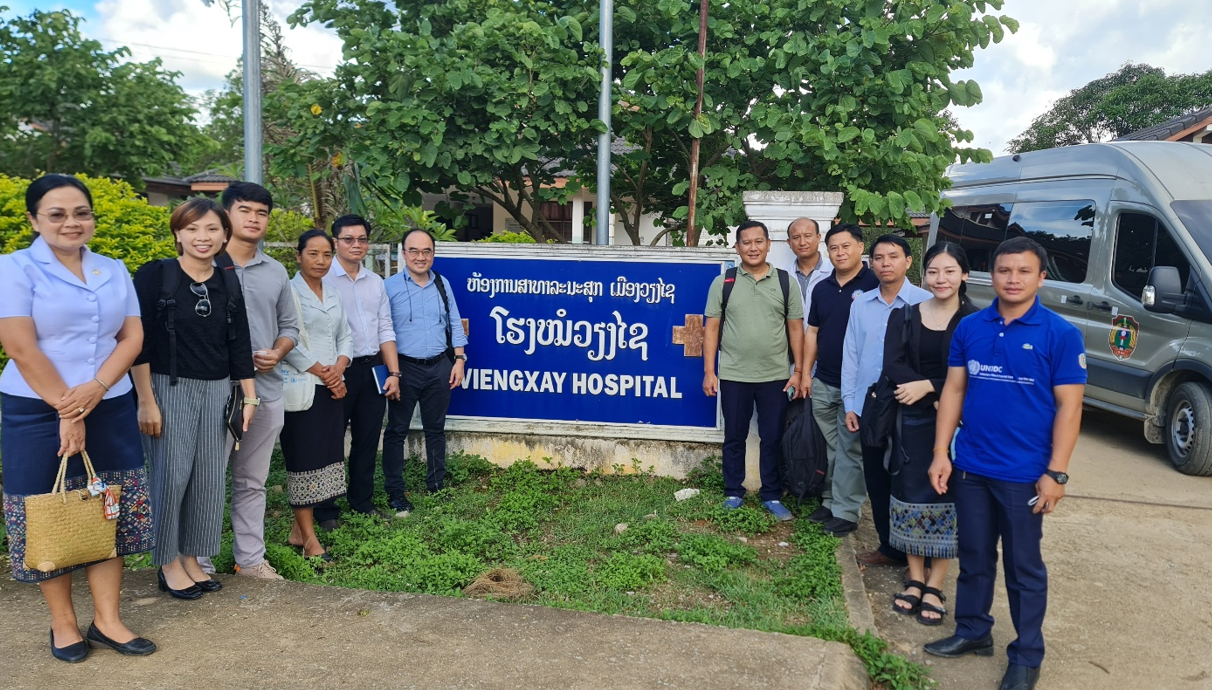 Assoc. Prof. PhD. Le Minh Giang and Vietnamese and Lao colleagues surveying to establish an opioid addiction treatment program in Houaphanh Province, Lao PDR in 2022.
R: As Director, what are your orientations and expectations for the next generation of Preventive Medicine specialists in the fight against HIV/AIDS, especially as they need to address new issues such as sexual health, discrimination, and reducing social stigma?
Assoc. Prof. PhD. Le Minh Giang: An important task for me is to train the next generation and create conditions for them to stand firm, go far, and stay long on the scientific path. In 2024 and 2025, three lecturers and researchers under my guidance and that of professors in the United States have received highly competitive, global-level K43 postdoctoral fellowships funded by the U.S. National Institutes of Health (NIH). These three young individuals will focus their research on HIV prevention among MSM, substance abuse interventions, and mental health, with barriers such as stigma and discrimination being a cross-cutting theme.
The potential to translate research results from Vietnam to address global public health challenges is immense. I expect that young researchers will always maintain faith in science, in the commitment of the Government and society as a whole, to dedicate themselves to difficult fields.
What I want to share with young colleagues is to always maintain faith in those around you. They will create opportunities for you, support you when you stumble. And what remains is that you yourselves must strive to utilize these wonderful things to bring a better life to many others.
R: Thank you very much, Assoc. Prof. PhD. Le Minh Giang, for this interview with Sức khỏe và Đời sống newspaper!
PrEP - A Tool to End AIDS by 2030
PrEP (Pre-Exposure Prophylaxis) is the use of antiretroviral (ARV) drugs by people who are HIV-negative but at high risk of infection to prevent virus transmission. PrEP has been proven to be a highly effective prevention method, achieving up to 99% effectiveness in preventing HIV transmission through sexual contact if used correctly and consistently as prescribed.
Importance in the Vietnamese Context:
1. Epidemic Control among MSM: PrEP is an essential intervention to curb the rapid spread of the HIV epidemic among men who have sex with men (MSM) – currently the biggest epidemiological challenge.
2. Improved Adherence: New developments in long-acting injectable PrEP (Long-Acting Injectables), such as cabotegravir or lenacapavir, promise to replace daily oral medication, helping users adhere better to treatment and addressing barriers that cause treatment interruptions.
The expansion of the PrEP program in Vietnam, as exemplified by the Sống Hạnh Phúc (SHP) Clinic, has enabled thousands of high-risk individuals to be protected, playing a crucial role in achieving the goal of ending the AIDS epidemic by 2030.